


Why Cannabis HR Compliance Matters for New and Growing Operators
Cannabis HR compliance plays a critical role in the long-term stability of any cannabis business. While licensing, facility approvals, and operational setup receive much of the early attention when launching a cannabis company, workforce compliance quickly becomes one of the most important responsibilities once employees enter the picture.
Running a compliant cannabis workforce requires more than basic employment policies. Operators must manage hiring documentation, payroll systems, employee classification, training procedures, workplace policies, and regulatory expectations that can vary significantly across state markets.
Because cannabis businesses operate in one of the most regulated industries in the United States, HR compliance issues can quickly become operational risks. Even small documentation errors or inconsistent workforce practices may attract regulatory scrutiny or create unnecessary legal exposure.
For cannabis operators preparing to hire employees or expand their teams, building a strong HR compliance framework early helps create a stable foundation for both workforce management and long-term growth.
How Cannabis HR Compliance Differs From Other Industries
Human resources compliance exists in every industry, but HR for cannabis businesses often requires additional operational awareness.
Cannabis companies must navigate traditional employment laws while also complying with industry-specific regulatory requirements. Depending on the state, cannabis employees may need to register with regulators, complete background checks, or maintain certain certifications in order to work within licensed facilities.
In addition to these regulatory considerations, cannabis operators frequently face unique operational challenges such as rapid workforce growth, complex shift scheduling, security requirements, and strict recordkeeping expectations.
Because of these factors, cannabis HR compliance is often more closely tied to daily operations than in many other industries.
Key Areas of Cannabis Workforce Compliance
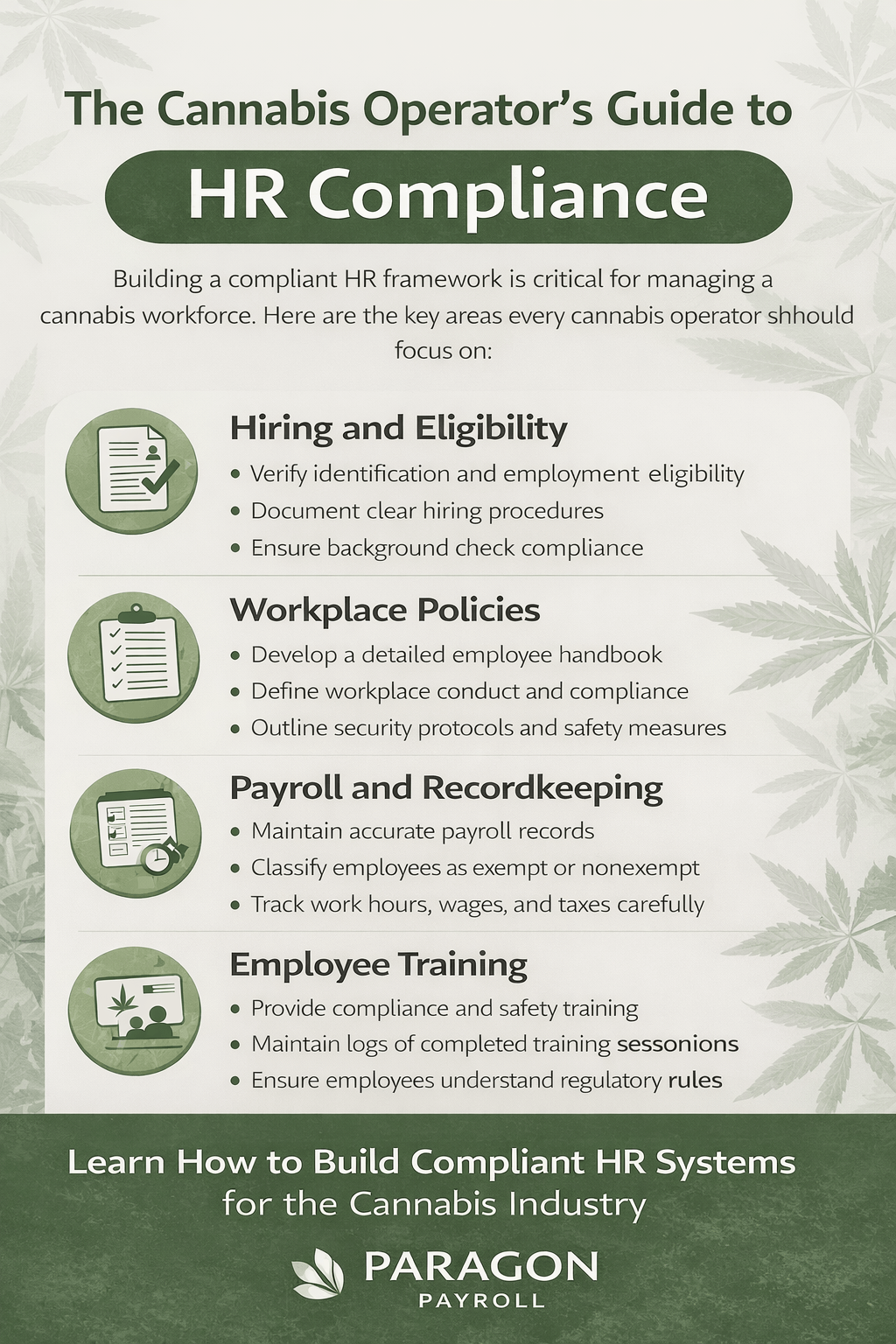
Maintaining cannabis workforce compliance involves several interconnected systems that help operators manage employees responsibly and consistently.
These areas often include:
Hiring documentation and eligibility verification
Operators must maintain clear hiring records, including identification verification, employment eligibility documentation, and job-specific qualifications.
Employee classification and compensation structure
Proper classification of employees helps ensure that wage laws, overtime rules, and payroll reporting requirements are followed correctly.
Workforce training and compliance education
Employees must understand the operational and regulatory expectations associated with their roles, particularly in areas related to product handling, inventory tracking, and security procedures.
Recordkeeping and documentation
Maintaining clear workforce documentation helps businesses demonstrate compliance if regulators request records during inspections.
When these areas are supported by clear HR systems, cannabis operators can maintain stronger workforce accountability and operational clarity.
Why Employee Policies Are Critical for Cannabis Compliance
Employee policies provide the structure that supports consistent behavior and operational discipline across the organization.
In cannabis businesses, employee handbooks and workplace policies typically outline expectations around workplace conduct, compliance responsibilities, attendance, security awareness, and operational procedures.

Clear policies help employees understand their responsibilities while also protecting the business by establishing consistent expectations across the workforce.
Without documented policies, companies may struggle with inconsistent management decisions, unclear expectations, and increased exposure to employment disputes.
Developing clear workplace policies early helps cannabis operators maintain a professional and compliant work environment as their teams grow.
The Role of Payroll Systems in Cannabis HR Compliance
Payroll systems are closely tied to HR compliance because they help track workforce information, compensation structures, and tax reporting obligations.
For cannabis businesses, payroll infrastructure must support accurate wage tracking, employee classification, benefits administration, and workforce documentation.
Payroll systems also help operators maintain compliance with federal and state employment requirements, including wage reporting and tax obligations.
When payroll systems integrate with HR processes, cannabis businesses are better able to manage employee information and maintain accurate records across their workforce.
Training and Onboarding in Cannabis Workforce Compliance
Employee onboarding and training are often overlooked components of cannabis HR compliance.
New hires should receive structured training that helps them understand workplace policies, compliance responsibilities, operational procedures, and safety expectations.
In regulated industries such as cannabis, training documentation is often just as important as the training itself. Maintaining records of completed training programs demonstrates that employees have received the information necessary to perform their roles responsibly.
Companies that invest in structured onboarding processes typically experience fewer compliance issues and stronger workforce performance.
Common Cannabis HR Compliance Mistakes Operators Make
New cannabis operators frequently encounter similar HR compliance challenges during their early stages of growth.
Some of the most common cannabis HR compliance mistakes include:
- delaying HR infrastructure until after employees are hired
- failing to maintain consistent workforce documentation
- overlooking compliance training requirements
- relying on informal workplace policies
- disconnecting HR processes from payroll systems
These challenges often arise when HR systems are treated as administrative tasks rather than operational infrastructure.
Building strong HR processes early helps prevent these problems and supports more consistent workforce management.
What Regulators Expect From Cannabis Workforce Compliance
Regulators expect cannabis businesses to demonstrate operational discipline across all aspects of the business, including workforce management.
This often means operators must be prepared to provide documentation related to:
- employee registration or eligibility
- training records
- workplace policies
- payroll documentation
- workforce compliance procedures
Companies that maintain organized HR systems are usually better prepared to respond to regulatory inquiries and inspections.
Operational transparency helps regulators see that the business is committed to responsible operations.
How Cannabis Operators Can Build Strong HR Compliance Systems
Developing strong cannabis HR compliance systems requires a proactive approach. Rather than reacting to workforce issues after they arise, operators should establish clear HR infrastructure that supports employees from the beginning.
A strong HR compliance system typically includes:
- documented hiring procedures
- a structured employee handbook
- payroll and HR system integration
- employee training programs
- clear workplace policies and expectations
When these elements work together, businesses are able to manage workforce responsibilities more effectively and reduce operational risk.
Why HR Infrastructure Supports Long-Term Cannabis Business Growth
Strong HR infrastructure does more than help operators remain compliant. It also supports the long-term success of the organization.
Companies with clear workforce systems tend to experience better employee retention, stronger workplace culture, and smoother operational growth.
In a rapidly evolving industry like cannabis, organizations that invest in operational discipline often gain a competitive advantage.
Building strong HR systems early allows leadership teams to focus on scaling the business rather than constantly reacting to workforce challenges.
Managing cannabis HR compliance requires thoughtful planning across hiring, payroll, employee policies, and workforce documentation.
Paragon works with cannabis operators to build payroll and HR infrastructure designed specifically for the cannabis industry, helping businesses maintain workforce compliance while supporting long-term growth.
