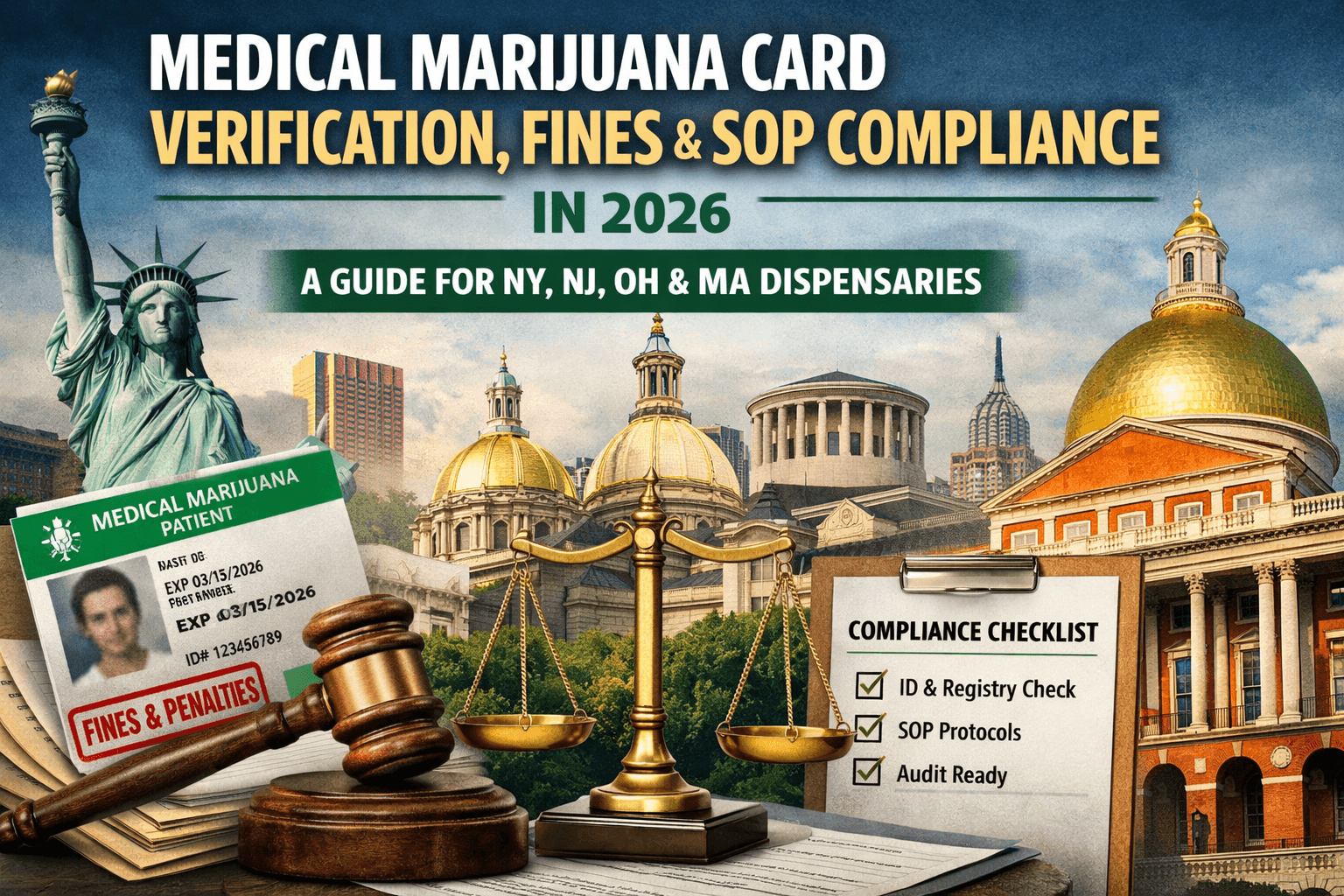
A General Guide for NY, NJ, OH & MA Dispensaries
In 2026, cannabis compliance is no longer just a regulatory requirement — it is a competitive advantage.
For operators in New York, New Jersey, Ohio, and Massachusetts, enforcement activity, registry tracking, and license oversight have intensified. Verification failures are triggering fines, corrective action plans, and audit escalations.
This guide covers:
- Medical marijuana card verification requirements
- State-specific compliance nuances (NY, NJ, OH, MA)
- Common fines and penalties
- SOP best practices
- What brand new licensees must prioritize
- How payroll and documentation impact audits
Why Medical Marijuana Card Verification Is Critical in 2026
Medical marijuana verification protects your license.
Across NY, NJ, OH, and MA, regulators expect dispensaries to:
- Confirm active patient status
- Verify expiration dates
- Monitor purchase limits
- Confirm caregiver relationships
- Log verification documentation
Even in dual-use states, medical transactions must follow stricter rules.
For state-level regulatory references:
Linking to state authorities improves SEO credibility and trust signals.
State-Specific Compliance Considerations (2026)
New York
- Rapid license expansion continues.
- Cultivation approvals are slowing due to oversupply concerns.
- OCM is actively monitoring registry verification and allotment tracking.
- Documentation consistency is critical during expansion phases.
Risk: Rapid hiring without structured compliance onboarding increases exposure.
New Jersey
- Social equity expansion continues.
- Municipal complexity creates layered compliance requirements.
- MSOs hold significant market share, increasing scrutiny.
- Registry verification errors are frequently cited in audits.
Risk: Inconsistent SOP application across municipalities.
Ohio
- Adult-use sales launched recently.
- Daily purchase limits increased in 2025.
- Structured regulatory framework, but enforcement is tightening.
- Dual-use licensing consolidation has increased reporting scrutiny.
Risk: New operators unfamiliar with registry protocols.
Massachusetts
- Mature market with high revenue per dispensary.
- Proposed social consumption regulations may introduce new compliance layers.
- CCC inspections remain detailed and documentation-heavy.
Risk: Legacy SOPs not updated for 2026 guidance.
Cannabis Compliance Fines in 2026
Common violations across NY, NJ, OH, MA:
- Selling to expired cardholders
- Failing registry verification
- Exceeding purchase limits
- Incomplete documentation logs
- Inadequate employee training records
Fines range from:
- $500–$5,000 (minor)
- $10,000+ (repeat)
- Suspension for patterns of negligence
Public reporting of violations damages brand credibility.
What Brand New Licensees Must Get Right Immediately
If you are newly licensed in NY, NJ, OH, or MA, early compliance mistakes can stall renewal or expansion.
1. Formal Compliance Onboarding Before Opening Day
No budtender should complete a transaction without:
- Registry training
- Written SOP acknowledgment
- Purchase limit education
2. Payroll & Shift Documentation Alignment
Regulators may request:
- Who was on shift
- Who verified the registry
- Who was trained
- When training occurred
If payroll records don’t align with compliance logs, this creates exposure.
3. Incident Log From Day One
Track:
- Registry downtime
- Expired card denials
- Over-limit flags
- Staff retraining
4. Quarterly Internal Mock Audits
New licensees should audit themselves before regulators do.
How Payroll & HR Systems Impact Cannabis Compliance
This is where many dispensaries underestimate risk.
Regulators increasingly review:
- Employee classification
- Training documentation
- Access controls
- Registry login permissions
- Shift logs
If your payroll system does not clearly document:
- Active employees
- Job roles
- Compliance training dates
- Shift assignments
You are exposed during audits.
High turnover increases compliance gaps.
Understaffed shifts increase verification errors.
Compliance is operational — not just regulatory.
2026 Dispensary Compliance Checklist (NY, NJ, OH, MA)
- Written state-specific verification SOP
- Documented registry login process
- Purchase limit monitoring system
- Expired card denial protocol
- Caregiver verification process
- Registry downtime plan
- Incident log
- Quarterly internal audits
- Payroll-compliance documentation alignment
Compliance is infrastructure.
Operators who treat verification as routine clerical work increase risk.
Operators who build structured SOPs, documented training, and payroll-aligned compliance systems protect their licenses long-term.
In NY, NJ, OH, and MA — regulators expect precision.
If you're opening in New York, New Jersey, Ohio, or Massachusetts — or expanding into one of these states — now is the time to pressure-test your compliance infrastructure.
From employee onboarding to payroll alignment and audit readiness, your backend systems should protect your license — not jeopardize it.
Schedule a strategy conversation. Let's Talk!