


Why Many Cannabis Operators Struggle in Their First Year of Business
Launching a cannabis business is a major milestone, but the first year of running a cannabis company often presents challenges that many new operators do not anticipate.
While licensing, facility buildouts, and regulatory approvals receive significant attention during the startup phase, the real complexity of operating a cannabis business typically begins once the doors open. Managing employees, maintaining regulatory compliance, coordinating inventory systems, and establishing reliable financial processes quickly become everyday responsibilities.
Many cannabis operator mistakes occur not because leadership lacks experience, but because the operational infrastructure required to run a compliant cannabis company is more complex than most founders expect. Workforce management, payroll systems, operational technology, and compliance processes all play a role in determining whether the first year feels stable or chaotic.
Understanding the most common cannabis business mistakes can help new operators build a stronger operational foundation and avoid preventable setbacks.
Underestimating the Complexity of Running a Cannabis Business
One of the most common cannabis operator mistakes is underestimating how complex daily operations become once a business begins serving customers and managing employees.
Running a cannabis company requires coordination across several operational areas, including:
- regulatory compliance
- workforce management
- inventory tracking and reporting
- facility security
- financial and payroll systems
Because cannabis is one of the most highly regulated industries in the United States, operational mistakes can create both business disruptions and regulatory concerns.
Operators who recognize early that cannabis businesses require disciplined operational systems tend to navigate their first year more successfully.

Waiting Too Long to Build Workforce and Payroll Infrastructure
Another common cannabis startup challenge is delaying workforce planning until the company is preparing to hire employees.
Hiring staff is a major milestone for any cannabis operator, but the systems that support employees should be developed before the first hire is made. Payroll systems, HR policies, onboarding procedures, and workforce training programs all require preparation.
Without these systems in place, cannabis companies often encounter problems such as:
- inconsistent employee policies
- payroll processing complications
- compliance gaps in workforce documentation
- confusion around job responsibilities
Organizations that prioritize workforce infrastructure early create a more stable environment for employees and leadership teams alike.
Treating Cannabis Compliance as a One-Time Task
A common cannabis business mistake is treating compliance as something that happens before opening rather than something that continues throughout the life of the company.
In reality, cannabis compliance affects nearly every part of the business. Inventory tracking, employee training, regulatory reporting, and recordkeeping must be maintained consistently to ensure the company remains in good standing with regulators.
Successful cannabis operators build compliance into their everyday operations. Instead of reacting to regulatory requirements, they establish procedures that ensure compliance becomes part of the organization’s culture.
This proactive approach reduces operational disruptions and helps leadership teams focus on growth rather than regulatory issues.
Delaying Technology and Operational System Decisions
Technology plays an essential role in modern cannabis operations.
POS systems, inventory management platforms, compliance tracking software, and workforce systems must all work together to support daily operations. Delaying technology decisions can make it difficult to integrate these systems once the business is already operating.
When operators attempt to implement operational technology at the last minute, they often encounter:
- integration challenges between systems
- employee training delays
- operational inefficiencies
- data reporting complications
Establishing a thoughtful technology stack early allows businesses to operate more smoothly as the company grows.
Financial and Payroll Mistakes Cannabis Operators Often Make
Financial planning is another area where cannabis operator mistakes frequently occur.
Because cannabis businesses operate under unique financial and tax conditions, financial infrastructure must be carefully designed. Payroll systems, tax reporting processes, workforce budgeting, and financial forecasting all play an important role in maintaining operational stability.
Companies that delay financial planning may find themselves trying to organize payroll systems and financial reporting processes while simultaneously managing hiring and regulatory obligations.
Strong financial infrastructure allows cannabis companies to manage growth more effectively during their first year of operations.
Hiring Too Quickly Without Operational Structure
Growth is exciting for new cannabis companies, but expanding the workforce without operational structure can create serious challenges.
Hiring rapidly without clear systems may lead to:
- inconsistent employee training
- unclear job responsibilities
- inefficient workflows
- increased compliance risk
Companies that balance growth with operational planning tend to build stronger teams and more sustainable businesses.
Developing clear organizational structures, training programs, and leadership communication processes allows teams to grow without losing operational discipline.
What Mistakes Do New Cannabis Operators Make Most Often?
Many cannabis operators encounter similar challenges during their first year of business.
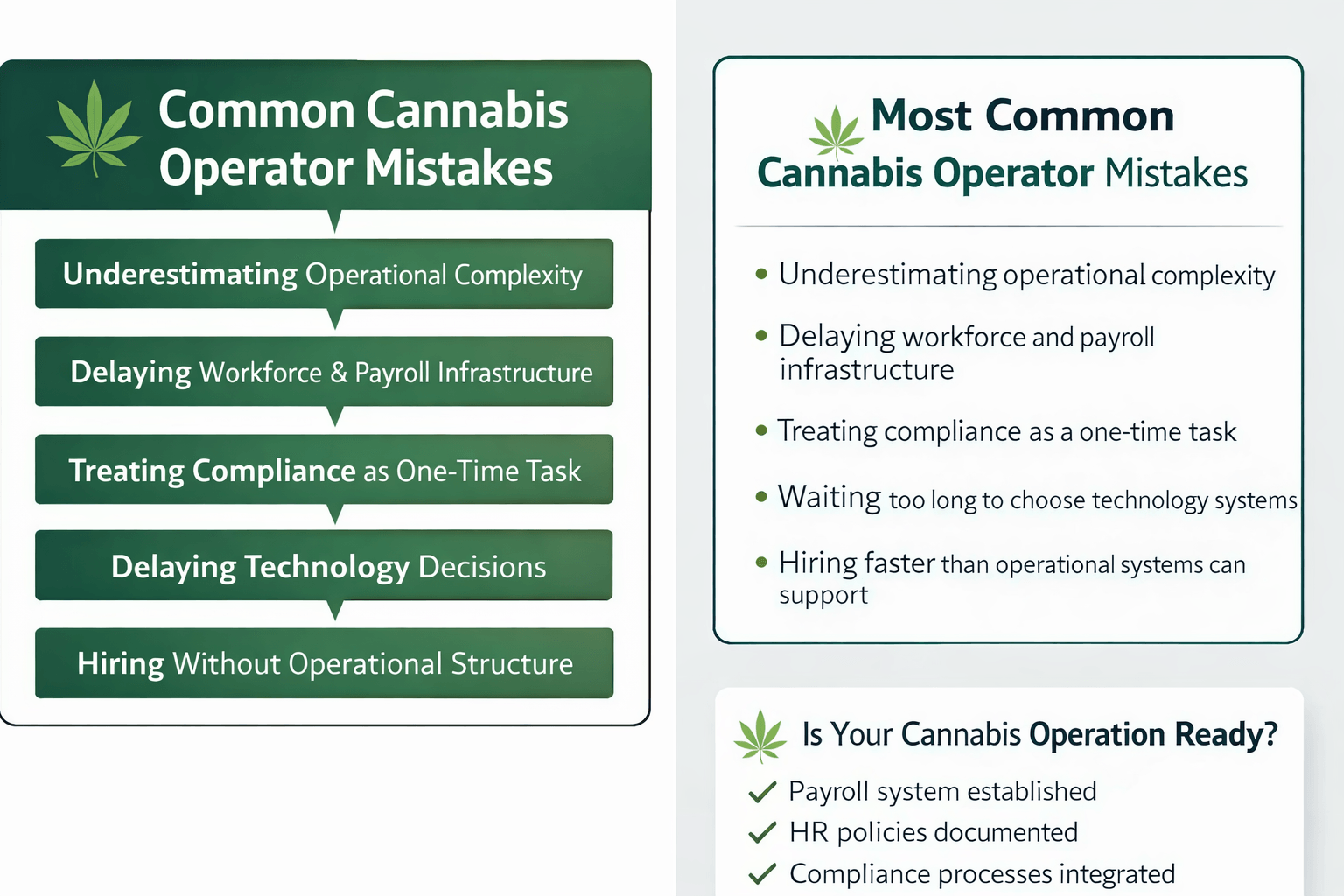
The most common cannabis operator mistakes include delaying payroll and HR infrastructure, underestimating operational complexity, treating compliance as a one-time requirement, postponing technology decisions, and expanding the workforce without clear operational systems.
Recognizing these challenges early helps operators prepare for the realities of running a cannabis company.
How New Cannabis Operators Can Avoid These Business Mistakes
Avoiding common cannabis business mistakes begins with preparation.
New operators should focus on building operational systems in several key areas:
- workforce and HR infrastructure
- payroll and financial management
- compliance processes
- operational technology
- leadership communication and training
Establishing these systems early allows companies to operate more confidently while maintaining regulatory discipline.
Building a Strong Operational Foundation for a Cannabis Business
Launching a cannabis company is only the beginning of the operational journey.
The businesses that succeed long term are those that invest in strong operational infrastructure from the beginning. Leadership teams that prioritize workforce systems, compliance processes, and operational discipline create organizations that are more resilient and prepared for growth.
The cannabis industry continues to evolve rapidly, and operators who prepare thoughtfully during their first year are better positioned to navigate both the challenges and opportunities ahead.
Running a cannabis business requires strong operational systems behind the scenes.
Paragon works with cannabis operators to build payroll, HR, and workforce compliance infrastructure designed specifically for the cannabis industry.
If you're preparing to hire employees or scale your operations, connecting with experienced partners early can make a significant difference.
Topics:
