

Why Cannabis Compliance Is One of the Most Important Parts of Running a Cannabis Business
Cannabis compliance is one of the most important operational responsibilities facing cannabis operators today. While licensing requirements often dominate the early stages of building a cannabis company, compliance responsibilities continue long after a license has been issued.
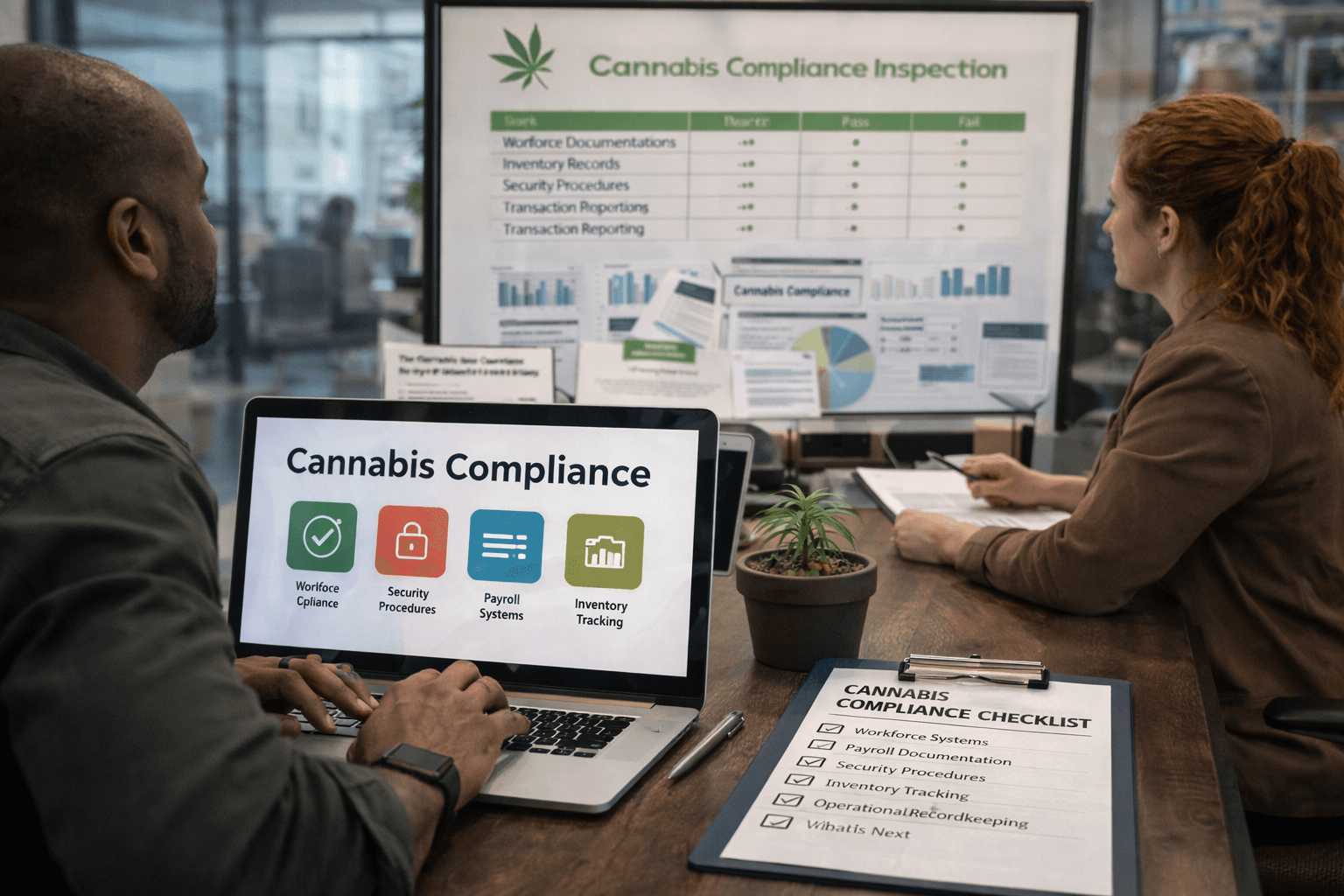
Running a compliant cannabis business requires maintaining clear operational systems that ensure employees, processes, and documentation all align with state and local regulations. Regulators expect cannabis companies to demonstrate accountability across workforce management, inventory tracking, facility security, payroll documentation, and operational reporting.
Because the cannabis industry operates under strict regulatory oversight, even small compliance failures can lead to significant operational consequences. Businesses that treat compliance as a daily operational system rather than a one-time regulatory hurdle tend to experience smoother inspections, stronger internal discipline, and greater long-term stability.
Understanding the full cannabis compliance checklist allows operators to build systems that support both regulatory expectations and sustainable business growth.
Understanding the Cannabis Regulatory Environment
The regulatory environment surrounding cannabis businesses is constantly evolving. Operators must comply with both state regulations and local government requirements, which often include licensing rules, operational standards, and compliance reporting obligations.
Unlike many other industries, cannabis businesses are subject to detailed operational oversight that affects nearly every part of the organization.
Regulatory expectations often include:
• strict product tracking systems
• workforce documentation requirements
• inventory reporting
• security procedures
• employee eligibility verification
• operational reporting requirements
Because regulatory requirements vary from state to state, cannabis operators must remain informed about changes in rules and compliance expectations.
Businesses that stay proactive about regulatory developments are far better positioned to maintain long-term operational success.
The Core Compliance Systems Every Cannabis Business Needs
Successful cannabis companies typically build several key compliance systems that support regulatory accountability and operational transparency.
These systems often include:
Workforce compliance systems
Employee documentation, eligibility verification, and training programs help ensure that staff members understand their responsibilities and maintain regulatory awareness.
Payroll and employment compliance
Payroll systems must support accurate wage reporting, employee classification, tax documentation, and workforce recordkeeping.
Inventory tracking systems
Most cannabis markets require seed-to-sale tracking systems that monitor product movement from cultivation through retail sale.
Security and facility compliance
Facilities must meet strict security standards designed to prevent unauthorized access, theft, and diversion.
Operational documentation
Operators must maintain clear records related to employee training, inventory movement, security procedures, and compliance reporting.
When these systems work together, businesses are able to demonstrate operational discipline and regulatory accountability.
Workforce Compliance: Managing Employees in a Regulated Industry
Cannabis workforce compliance plays a central role in maintaining regulatory accountability.
Employees must understand operational procedures, compliance expectations, and regulatory responsibilities associated with their roles. Workforce documentation also helps demonstrate that employees meet eligibility requirements and have received appropriate training.
Workforce compliance typically includes:
• employee eligibility verification
• background checks where required
• training documentation
• workplace policy acknowledgment
• job-specific compliance training
Organizations that invest in structured workforce systems tend to reduce compliance risk and create stronger operational culture.
Payroll Compliance for Cannabis Businesses
Payroll compliance is another critical component of the cannabis compliance checklist. Cannabis companies must ensure that payroll systems accurately track employee compensation, tax reporting, and workforce documentation.
Payroll compliance responsibilities often include:
• employee classification verification
• accurate wage reporting
• tax documentation and filing
• workforce payroll recordkeeping
• benefits and compensation reporting
Because cannabis businesses face unique financial conditions, payroll systems must be designed to support both compliance and financial transparency.

Facility Security and Operational Compliance
Security requirements represent one of the most visible compliance obligations in the cannabis industry.
Most cannabis regulations require operators to maintain secure facilities designed to prevent theft, diversion, and unauthorized access. Security systems may include surveillance cameras, access control systems, alarm monitoring, and secure product storage.
Facility security plans typically outline:
• surveillance coverage requirements
• visitor access procedures
• employee access controls
• alarm and monitoring systems
• incident reporting procedures
Maintaining strong security infrastructure helps operators demonstrate compliance and protect their businesses from operational risk.
Inventory Tracking and Product Compliance
Inventory tracking systems are essential for maintaining regulatory transparency. Many cannabis markets require operators to participate in seed-to-sale tracking systems that record the movement of cannabis products throughout the supply chain.
Inventory compliance systems typically track:
• product cultivation and harvesting
• product processing and packaging
• inventory transfers between facilities
• retail sales transactions
These systems help regulators monitor cannabis product movement and prevent diversion into unregulated markets.
Operators must maintain accurate inventory records to remain compliant.
Documentation and Recordkeeping for Cannabis Compliance
Documentation plays a crucial role in demonstrating regulatory compliance. Regulators often expect cannabis businesses to maintain detailed records related to operational procedures, workforce management, inventory tracking, and compliance training.
Common documentation requirements include:
• employee training records
• payroll documentation
• compliance procedures
• operational policies
• inspection preparation records
Organized recordkeeping systems help operators respond quickly to regulatory inspections and maintain operational transparency.
Preparing for Cannabis Compliance Inspections
Regulatory inspections are a routine part of cannabis operations. Inspectors may review operational procedures, facility security systems, workforce documentation, and inventory records.
Preparation for inspections often includes reviewing:
• employee documentation
• compliance training records
• facility security systems
• inventory tracking reports
• operational procedures
Businesses that maintain consistent documentation and operational discipline typically navigate inspections with fewer complications.
How Strong Compliance Systems Support Long-Term Cannabis Business Growth
Compliance systems do more than satisfy regulatory expectations. They also help businesses develop operational discipline that supports long-term growth.
Companies with strong compliance infrastructure tend to experience:
• more stable operations
• clearer workforce accountability
• improved leadership decision-making
• stronger relationships with regulators
In a rapidly evolving industry like cannabis, companies that maintain strong operational systems often gain a competitive advantage.
FAQ: Cannabis Compliance Checklist
What is a cannabis compliance checklist?
A cannabis compliance checklist outlines the operational systems, documentation requirements, and regulatory responsibilities that cannabis businesses must maintain in order to remain compliant with state and local regulations.
Why is cannabis compliance important?
Cannabis compliance ensures that businesses operate within regulatory guidelines designed to protect public safety, maintain industry transparency, and prevent illegal product diversion.
What are the most important cannabis compliance systems?
The most important compliance systems typically include workforce documentation, payroll compliance, inventory tracking systems, security infrastructure, and operational recordkeeping.
How do cannabis businesses maintain compliance?
Cannabis businesses maintain compliance by implementing structured operational systems, maintaining accurate documentation, training employees, and regularly reviewing regulatory requirements.
Do cannabis businesses face regular inspections?
Yes. Many cannabis regulators conduct routine inspections to verify that operators are maintaining compliance with licensing requirements, workforce documentation, security procedures, and inventory tracking systems.
How does payroll affect cannabis compliance?
Payroll systems support compliance by maintaining accurate employee documentation, tax reporting, workforce classification records, and wage tracking systems.
Building a Cannabis Compliance System That Supports Long-Term Success
Maintaining cannabis compliance requires more than simply meeting licensing requirements. It requires building operational systems that support workforce accountability, payroll transparency, inventory tracking, and regulatory reporting.
Businesses that treat compliance as a core operational system often develop stronger organizations capable of navigating industry complexity.
As cannabis markets continue to mature, companies that invest in disciplined compliance systems will be better positioned to grow sustainably while maintaining strong relationships with regulators.
Paragon helps cannabis operators build payroll and workforce compliance systems designed specifically for the cannabis industry.
